What is Skin Conditions Related to Diabetes
Diabetes doesn’t only affect internal organs like kidneys, eyes, and nerves — it also has a big impact on the skin. In fact, many times, early signs of diabetes may first show up on the skin. High blood sugar levels affect blood circulation, weaken the immune system, and make the skin more prone to infections and other issues.Diabetes doesn’t only affect internal organs like kidneys, eyes, and nerves — it also has a big impact on the skin. In fact, many times, early signs of diabetes may first show up on the skin. High blood sugar levels affect blood circulation, weaken the immune system, and make the skin more prone to infections and other issues.
Causes & Risk Factors
- High blood sugar levels → damage skin’s natural defense.
- Poor circulation → slows down wound healing.
- Low immunity → increases risk of bacterial and fungal infections.
- Nerve damage → causes dryness, itching, unnoticed injuries.
- Obesity → increases risk of certain skin conditions.
Common Skin Conditions in Diabetes
- Bacterial infections – boils, styes, carbuncles, infected hair follicles.
2. Fungal infections – common due to Candida albicans, often seen in warm/moist areas (armpits, groin, under breasts).
3. Itching (Pruritus) – often due to dryness, yeast infections, or poor circulation.
4. Diabetic Dermopathy – light brown scaly patches, usually on shins (“shin spots”).
5. Acanthosis Nigricans – dark, thickened velvety skin (neck, armpits, groin), common in insulin resistance.
6. Necrobiosis Lipoidica Diabeticorum (NLD) – shiny reddish-brown patches with thin skin, usually on legs.
7. Blisters (DiabeticBullae) – painless, fluid-filled blisters, usually on feet and hands.
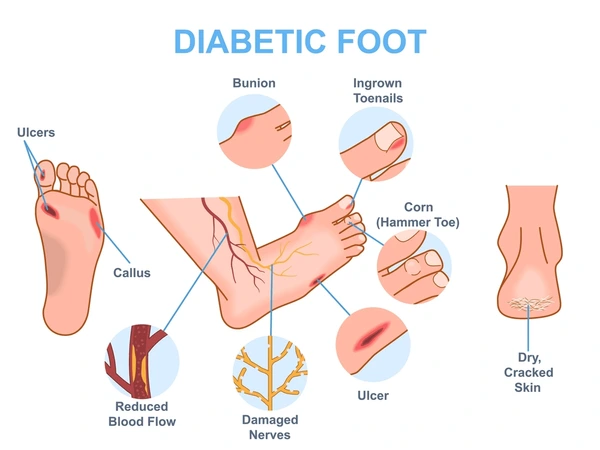
8. Diabetic Foot Ulcers – open sores due to nerve damage + poor circulation.
Complications
- Increased risk of severe infections.
- Delayed wound healing.
- Pain, itching, discomfort.
- Skin ulcers may progress to gangrene if not treated properly.
Homeopathic Approach to Skin Conditions in Diabetes
Homeopathy views skin conditions not as superficial, but as a reflection of internal imbalance caused by high blood sugar and weak immunity. Remedies are chosen based on the individual’s constitution, type of skin complaint, and associated symptoms
Common Remedies:
- Sulphur – for chronic itching, burning skin eruptions, worse from heat.
- Graphites – for dry, rough, cracked skin with sticky discharge.
- Thuja – for dark, thickened skin, warts-like growth, insulin resistance type conditions (acanthosis nigricans).
- Arsenicum Album – for burning skin eruptions, ulcers, with restlessness.
- Antimonium Crudum – for thickened, hard skin, corns, cracks on feet.
- Calendula (topical) – for wound healing and preventing infections in diabetic ulcers.
Homeopathy works by boosting immunity, improving skin healing, and addressing underlying diabetes imbalance. Along with remedies, proper sugar control and hygiene are essential.