colon cancer (large intestine cancer)
Cancer

Colon Cancer (Large Intestine Cancer)

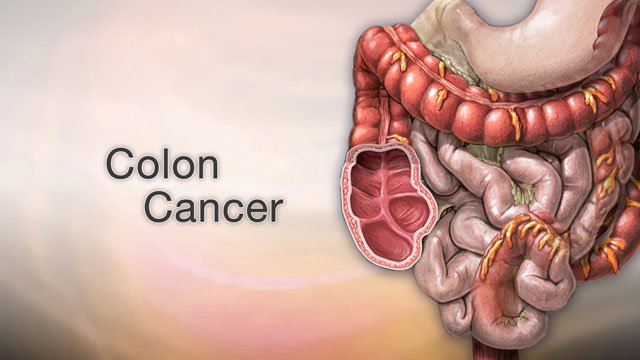
Colon Cancer, also called Large Intestine Cancer, begins in the colon, the longest part of the large intestine.
It usually develops from precancerous polyps that gradually turn cancerous over time.
Risk factors include older age, family history, obesity, low-fiber diet, smoking, and alcohol use.
Symptoms include changes in bowel habits, blood in stool, abdominal pain, weakness, and weight loss.
Treatment may include surgery, chemotherapy, radiation therapy, targeted therapy, or immunotherapy.

Colon Cancer (Large Intestine Cancer) Read Post »
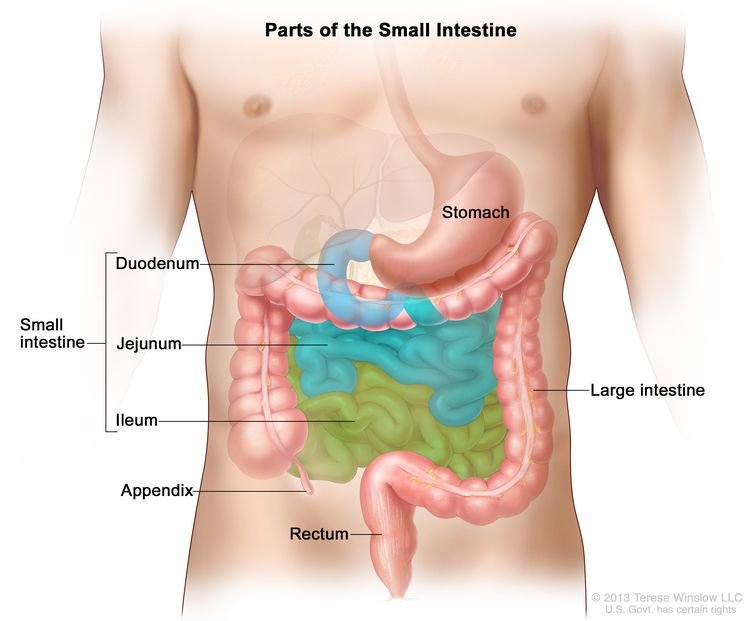
small intestine cancer
Cancer

Small Intestine Cancer

Small Intestine Cancer is a rare cancer that begins in the tissues of the small intestine, which helps digest food and absorb nutrients.
It can develop as adenocarcinoma, sarcoma, lymphoma, or carcinoid tumors.
Risk factors include Crohn’s disease, celiac disease, high-fat diet, smoking, and family history.
Symptoms include abdominal pain, nausea, vomiting, weight loss, and blood in stool.
Treatment options may involve surgery, chemotherapy, targeted therapy, or radiation therapy.

Small Intestine Cancer Read Post »

stomach (gastric) cancer
Cancer

Stomach (Gastric) Cancer

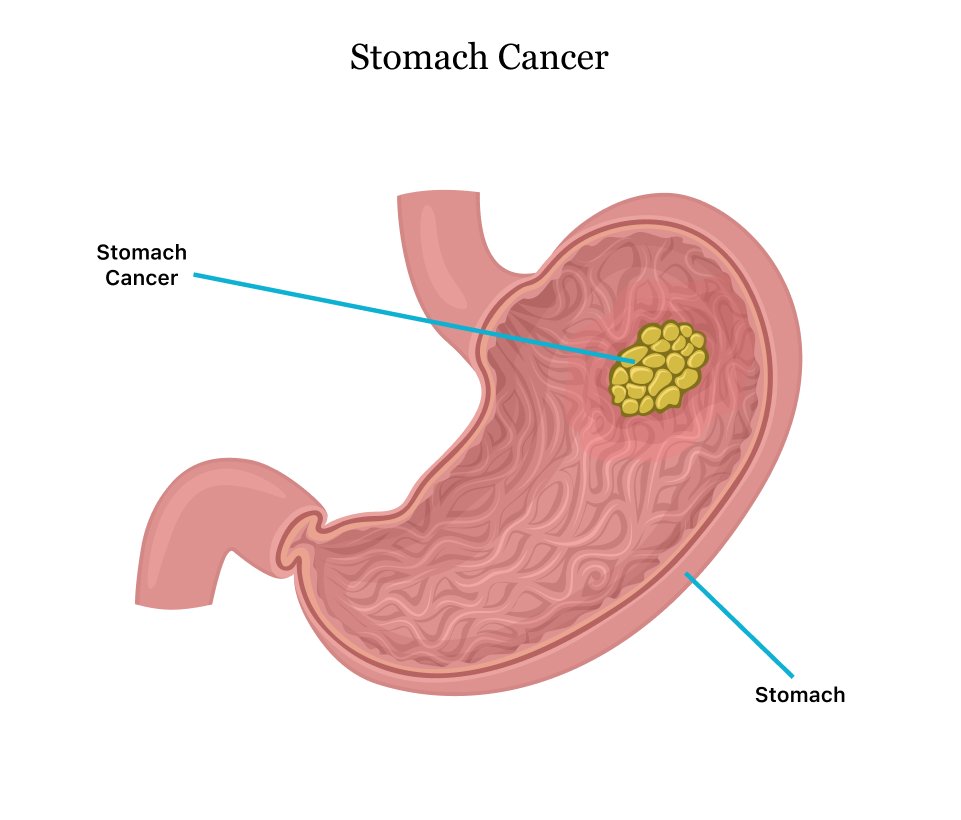
Stomach Cancer, also called Gastric Cancer, develops in the lining of the stomach.
It is often linked to Helicobacter pylori infection, smoking, high-salt diet, and family history.
Symptoms include indigestion, bloating, nausea, stomach pain, vomiting blood, and weight loss.
It can spread to nearby organs and lymph nodes if not detected early.
Treatment includes surgery, chemotherapy, radiation therapy, targeted therapy, and immunotherapy.

Stomach (Gastric) Cancer Read Post »

esophageal cancer (cancer of the food pipe)
Cancer

Esophageal Cancer (Cancer of the Food Pipe)

Esophageal Cancer develops in the lining of the esophagus (food pipe), which carries food from the throat to the stomach.
It is commonly associated with smoking, alcohol use, chronic acid reflux, and obesity.
Symptoms include difficulty swallowing, chest pain, heartburn, weight loss, and coughing.
There are two main types: squamous cell carcinoma and adenocarcinoma.
Treatment options include surgery, chemotherapy, radiation therapy, and targeted therapy.

Esophageal Cancer (Cancer of the Food Pipe) Read Post »

oral cancer (mouth cancer)
Cancer

Oral Cancer (Mouth Cancer)

Oral Cancer, also called Mouth Cancer, develops in the tissues of the mouth such as lips, tongue, gums, or inner cheeks.
It is often linked to tobacco use, alcohol consumption, and HPV infection.
Common symptoms include mouth sores that don’t heal, persistent pain, difficulty swallowing, and lumps in the mouth.
Early detection is crucial, as oral cancer can spread to nearby lymph nodes and other organs.
Treatment may include surgery, radiation therapy, chemotherapy, and targeted therapy.

Oral Cancer (Mouth Cancer) Read Post »

multiple myeloma (cancer of plasma cells in bone marrow)
Cancer

Multiple Myeloma (Cancer of Plasma Cells in Bone Marrow)

Multiple Myeloma is a cancer of plasma cells, a type of white blood cell found in the bone marrow.
It causes abnormal plasma cells to multiply, reducing normal blood cell production and weakening bones.
Common symptoms include bone pain, frequent infections, fatigue, anemia, and kidney problems.
Complications can include fractures, high calcium levels, and reduced immunity.
Treatment options include chemotherapy, targeted therapy, immunotherapy, and stem cell transplant.

Multiple Myeloma (Cancer of Plasma Cells in Bone Marrow) Read Post »

lymphoma (cancer of the lymph nodes)
Cancer

Lymphoma (Cancer of the Lymph Nodes)

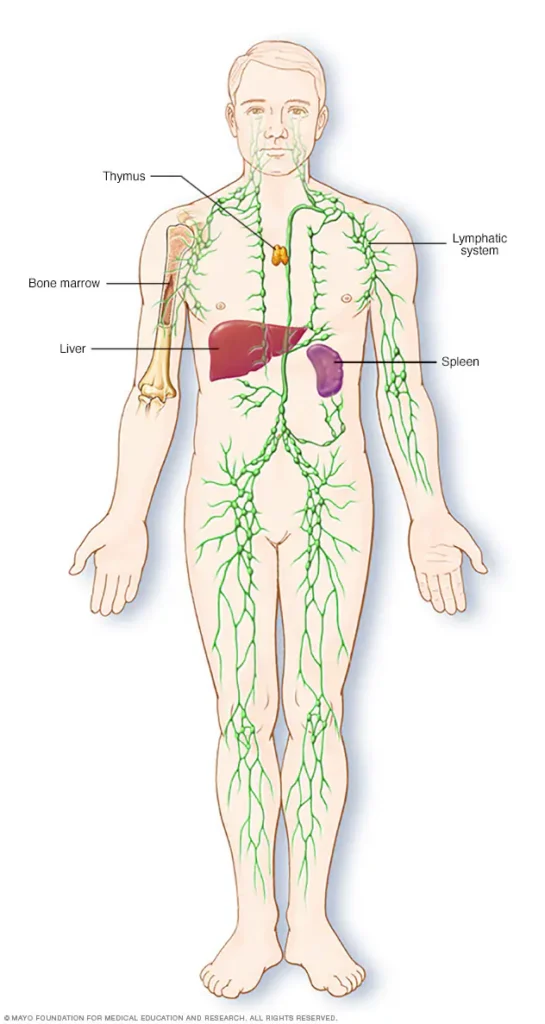
Lymphoma is a cancer that begins in the lymphatic system, which is part of the body’s immune defense.
It occurs when lymphocytes (a type of white blood cell) grow abnormally and form tumors in lymph nodes or other organs.
The main types are Hodgkin lymphoma and Non-Hodgkin lymphoma.
Symptoms include painless swollen lymph nodes, fever, night sweats, fatigue, and weight loss.
Treatment may involve chemotherapy, radiation therapy, immunotherapy, or stem cell transplant.

Lymphoma (Cancer of the Lymph Nodes) Read Post »

leukemia (blood cancer)
Blood Cancer

Leukemia (Blood Cancer)

Leukemia is a type of blood cancer that starts in the bone marrow, where blood cells are produced.
It leads to uncontrolled growth of abnormal white blood cells, which crowd out healthy blood cells.
Common symptoms include fatigue, frequent infections, fever, bleeding, and weight loss.
Leukemia can be acute (fast-growing) or chronic (slow-growing), affecting children and adults differently.
Treatment includes chemotherapy, targeted therapy, radiation, and bone marrow transplant.

Leukemia (Blood Cancer) Read Post »

interstitial cystitis (ic)
Chronic diseases

Interstitial Cystitis (IC) / Painful Bladder Syndrome

Interstitial Cystitis (IC), also called Painful Bladder Syndrome, is a chronic bladder condition.
It causes bladder pressure, frequent urination, and pelvic pain without infection.
The exact cause is unclear but may involve bladder lining defects, immune issues, or nerve sensitivity.
Symptoms often worsen with stress, certain foods, or during menstruation in women.
Treatment focuses on lifestyle changes, bladder training, medications, and supportive therapies.

Interstitial Cystitis (IC) / Painful Bladder Syndrome Read Post »

prostatitis normal and inflamed prostate isolated vector
Male Health Issues

Prostatitis (Prostate Infection/Inflammation)

Prostatitis is the inflammation or infection of the prostate gland in men.
It may be acute (sudden) or chronic (long-lasting), often caused by bacteria.
Symptoms include pelvic pain, painful urination, difficulty passing urine, fever, and sometimes painful ejaculation.
Chronic prostatitis can cause recurrent urinary symptoms and discomfort.
Treatment depends on the cause and may include antibiotics, pain relief, and lifestyle changes.

Prostatitis (Prostate Infection/Inflammation) Read Post »