Vitiligo

skin problem, Vitiligo

Mucosal Vitiligo

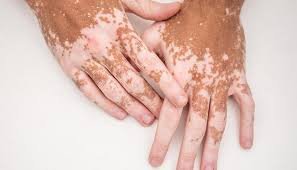
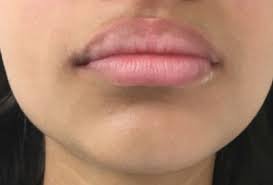
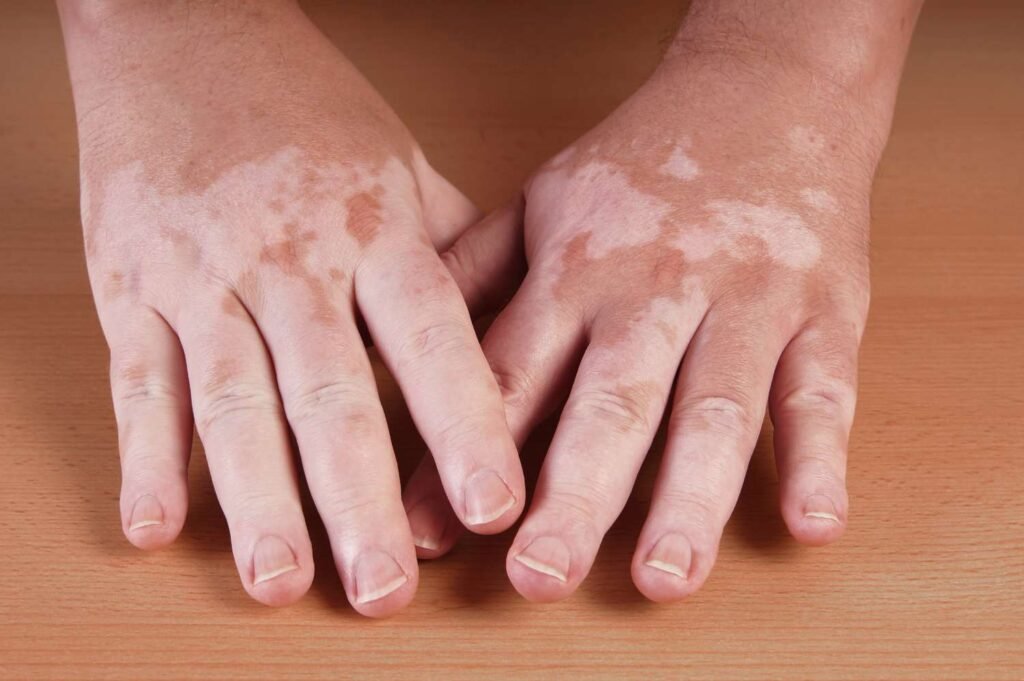
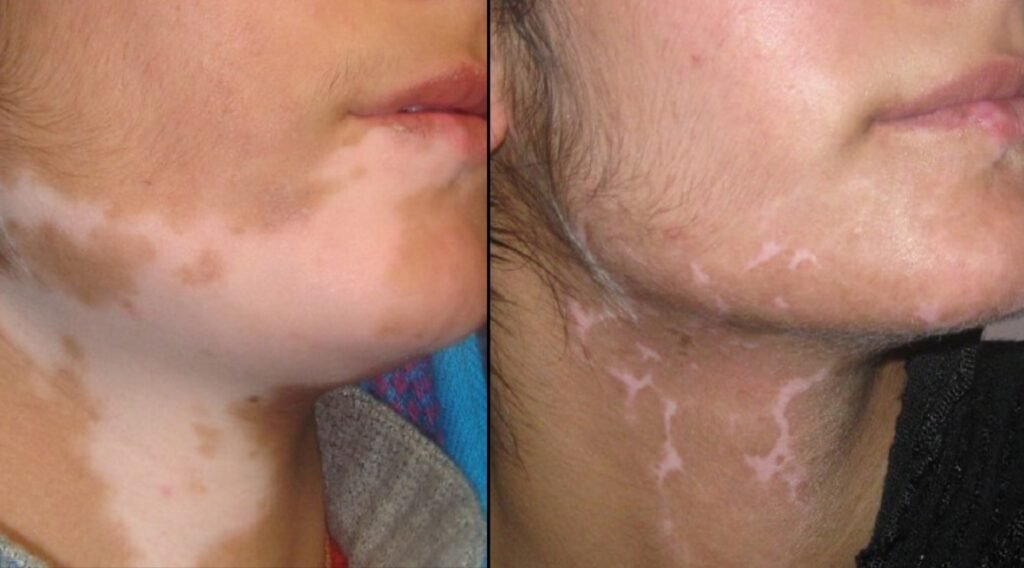
Mucosal Vitiligo affects the mucous membranes of the body, such as the lips, mouth, nose, genital areas, and sometimes eyes. It causes white or depigmented patches in these regions. This type does not usually involve the skin elsewhere on the body. It can occur alone or along with other forms of vitiligo. Early recognition helps in managing cosmetic and emotional concerns.
Mucosal Vitiligo Read Post »

skin problem, Vitiligo

Mixed Vitiligo

Mixed Vitiligo is a combination of two or more types of vitiligo, such as segmental and non-segmental forms. It shows both localized and generalized depigmentation patterns. This type often starts as segmental and later spreads like generalized vitiligo. The distribution of patches is irregular and unpredictable. Early diagnosis helps in managing its progression effectively.

Mixed Vitiligo Read Post »

skin problem, Vitiligo

Universal Vitiligo

Universal Vitiligo is the most extensive form of vitiligo, where almost all body skin loses its pigment. It affects more than 80–90% of the body surface area. The condition can develop from other types of vitiligo and may progress rapidly. Hair, eyebrows, and eyelashes may also turn white. It is often associated with autoimmune and genetic factors.

Universal Vitiligo Read Post »

skin problem, Vitiligo

Acrofacial Vitiligo

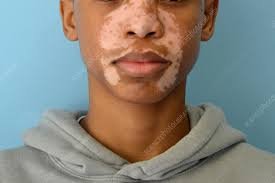
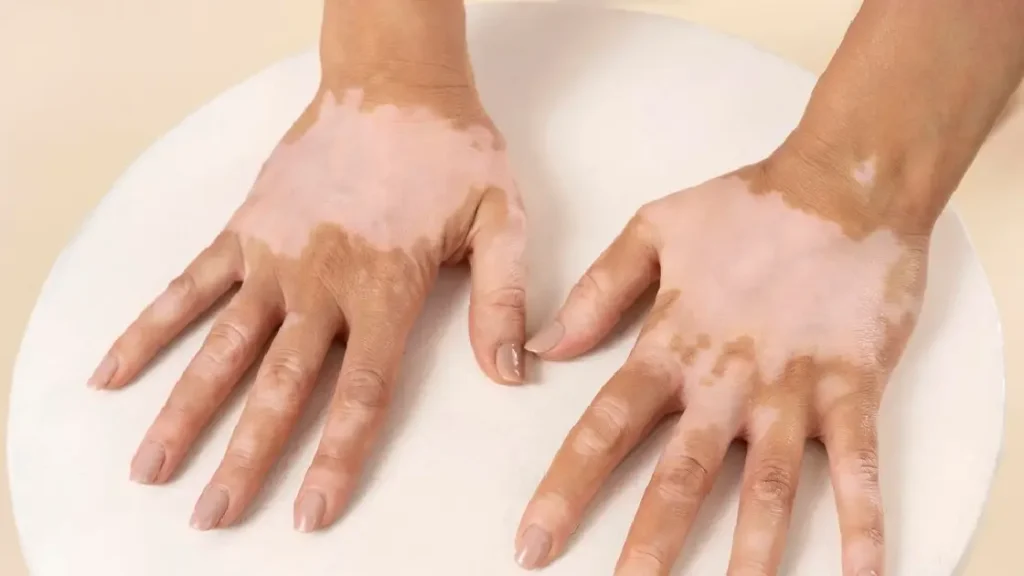
Acrofacial Vitiligo is a type of vitiligo that primarily affects the face and the extremities, such as the fingers, toes, hands, and feet. The depigmented patches often appear around body openings like the eyes, mouth, and nose. It occurs due to the destruction or malfunction of melanocytes, leading to loss of skin color in exposed areas. The condition may progress to generalized vitiligo in some cases. Treatment focuses on pigment restoration, sun protection, and cosmetic management.

Acrofacial Vitiligo Read Post »

skin problem, Vitiligo

Generalized Vitiligo

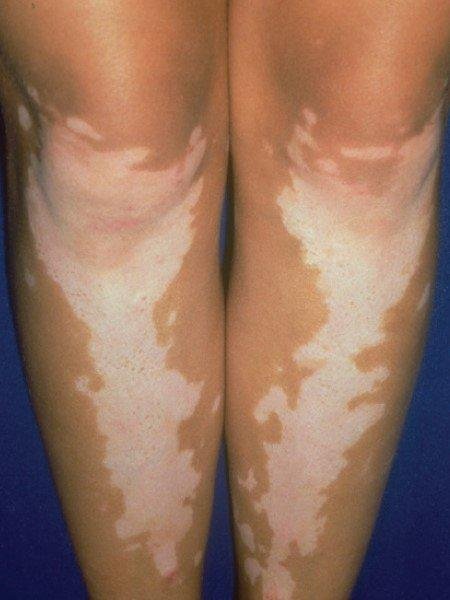
Generalized Vitiligo is the most common form of vitiligo, characterized by widespread, symmetrical white patches on different parts of the body. It results from the loss of melanocytes, the pigment-producing cells, due to autoimmune activity. The condition may progress gradually or rapidly, affecting large skin areas over time. Commonly involved regions include the face, hands, and joints. Treatment aims to restore pigmentation, slow progression, and support emotional and cosmetic well-being.

Generalized Vitiligo Read Post »

skin problem, Vitiligo

Segmental Vitiligo

Segmental Vitiligo is a type of vitiligo in which depigmented patches appear on one side or segment of the body, often following a nerve or dermatome distribution. It usually develops at a younger age and progresses rapidly initially, then stabilizes. Unlike generalized vitiligo, segmental vitiligo is often limited to a single area and rarely spreads widely. The exact cause is linked to localized melanocyte dysfunction, possibly influenced by neural factors. Treatment focuses on restoring pigmentation, halting progression, and addressing cosmetic concerns.

Segmental Vitiligo Read Post »

skin problem, Vitiligo

Localized Vitiligo

Localized Vitiligo is a form of vitiligo in which depigmented white patches are confined to a specific area of the body. It often appears on the face, hands, or neck and usually does not spread extensively. The condition results from the loss or dysfunction of melanocytes in the affected region. Localized vitiligo may be associated with autoimmune factors or skin trauma. Treatment focuses on restoring pigmentation, preventing progression, and improving cosmetic appearance.

Localized Vitiligo Read Post »

skin problem, Vitiligo

Vitiligo

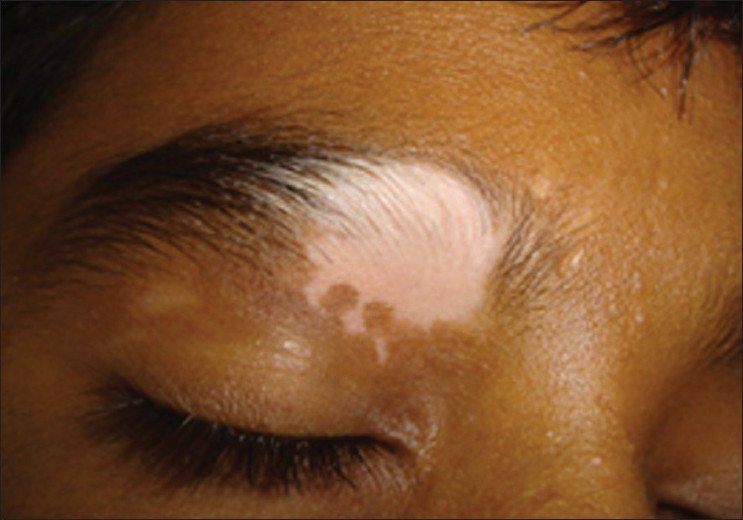
Vitiligo is a chronic skin condition characterized by the loss of pigmentation, resulting in white patches on the skin. It occurs when melanocytes, the cells responsible for skin color, are destroyed or stop functioning. The patches can appear anywhere on the body and may spread over time. The exact cause is not fully understood, but autoimmune factors, genetics, and environmental triggers are involved. Treatment focuses on restoring skin color, slowing progression, and managing cosmetic concerns.

Vitiligo Read Post »