Thyroid

Thyroid

Cystic Thyroid Nodule

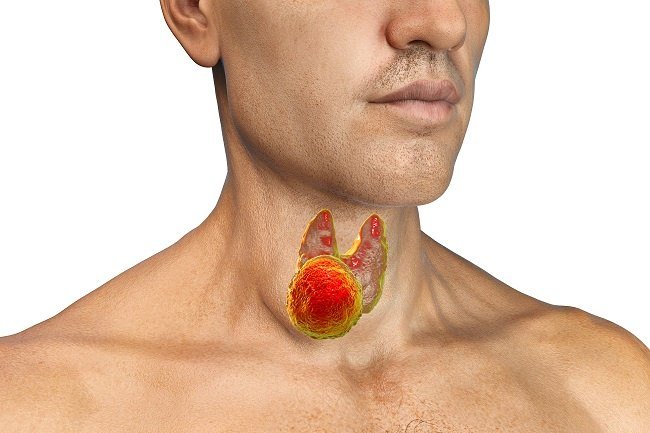
A cystic thyroid nodule is a fluid-filled sac within the thyroid gland.
These nodules are often benign and may result from degeneration of a solid thyroid nodule.
Symptoms can include a visible lump in the neck, discomfort, or difficulty swallowing in large cysts.
Ultrasound imaging helps in identifying the cystic nature and guiding treatment.
Management may involve observation, aspiration, or surgical removal if symptomatic or suspicious.

Cystic Thyroid Nodule Read Post »

Thyroid

Thyroid Nodules

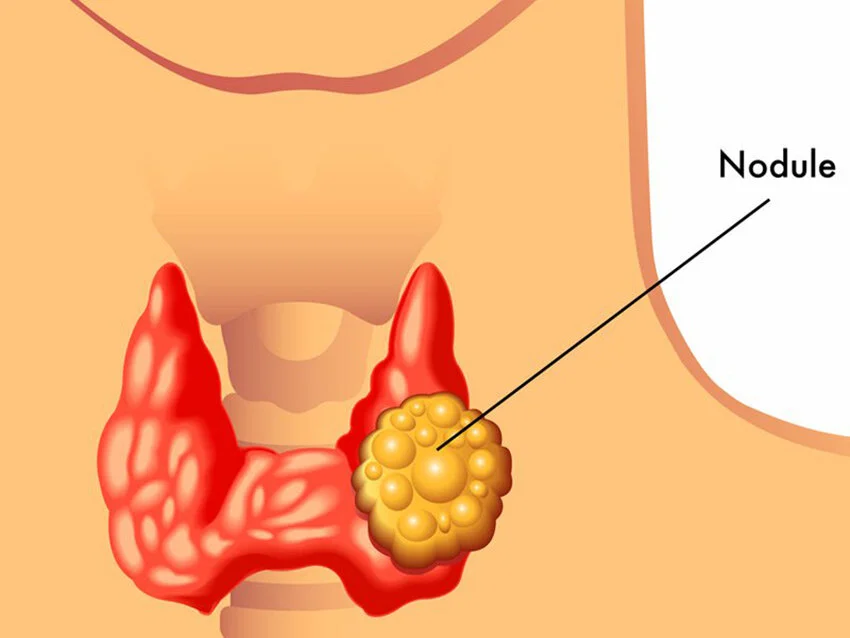
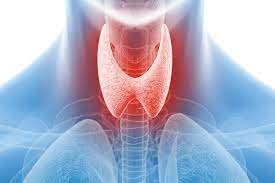
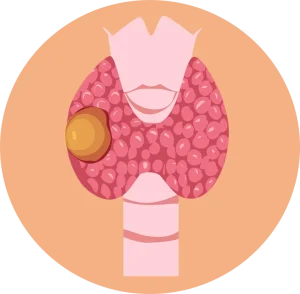
Thyroid nodules are abnormal growths or lumps within the thyroid gland.
They can be single or multiple and may be solid or filled with fluid.
Most nodules are benign, but a small percentage can be cancerous.
Symptoms may include neck swelling, difficulty swallowing, or, rarely, changes in voice.
Evaluation involves physical examination, ultrasound, and sometimes fine-needle aspiration for diagnosis.

Thyroid Nodules Read Post »

Thyroid

Endemic Goitre

Endemic goitre is a type of thyroid enlargement that occurs in populations with insufficient dietary iodine.
It is commonly seen in areas where the soil and water are low in iodine.
Symptoms include visible swelling in the neck, sometimes leading to difficulty swallowing or breathing.
The condition can affect both children and adults, and may cause developmental delays in children.
Prevention and treatment include iodine supplementation through diet or iodized salt.

Endemic Goitre Read Post »

Thyroid

Multinodular Goitre (MNG)

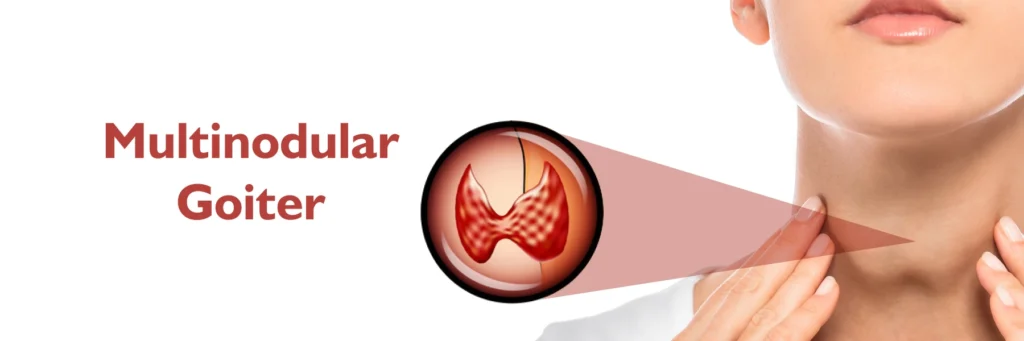
Multinodular goitre (MNG) is a condition in which the thyroid gland develops multiple nodules.
It often results from long-standing iodine deficiency or genetic factors.
Symptoms may include visible neck swelling, difficulty swallowing, and, in some cases, hyperthyroidism.
The nodules can be benign, but some may rarely become cancerous.
Treatment depends on the size, symptoms, and thyroid function, and may include observation, medications, or surgery.

Multinodular Goitre (MNG) Read Post »

Thyroid

Toxic Goitre (Toxic Nodular or Diffuse Goitre)

Toxic Goitre refers to an enlarged thyroid gland that produces excessive thyroid hormones, leading to hyperthyroidism.
It can be nodular (with one or more nodules) or diffuse (uniform gland enlargement).
Symptoms include weight loss, heat intolerance, palpitations, and irritability.
Common causes are Graves’ disease and toxic multinodular goitre.
Early diagnosis and treatment are essential to prevent cardiac and metabolic complications.

Toxic Goitre (Toxic Nodular or Diffuse Goitre) Read Post »

Thyroid

Simple Goitre (Non-toxic Goitre)

Simple Goitre, also known as Non-toxic Goitre, is an enlargement of the thyroid gland without any change in thyroid hormone levels.
It usually occurs due to iodine deficiency or increased demand for thyroid hormones during puberty or pregnancy.
The swelling is typically visible in the neck and is painless.
Most cases are benign and respond well to dietary iodine correction.
If untreated, the goitre may gradually enlarge and cause cosmetic or compressive symptoms.

Simple Goitre (Non-toxic Goitre) Read Post »

Thyroid

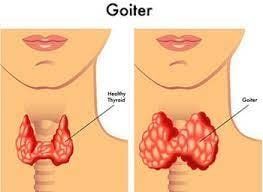
Goitre (Thyroid Enlargement)

Goitre refers to the abnormal enlargement of the thyroid gland, which is located at the front of the neck. It can occur due to iodine deficiency, autoimmune thyroid diseases, or hormonal imbalance. The swelling may be visible or felt as a lump in the neck. Depending on the cause, thyroid function may be normal, overactive, or underactive. Early evaluation helps prevent complications and ensures proper treatment.

Goitre (Thyroid Enlargement) Read Post »

Thyroid

Thyroid-Induced Hyperthyroidism

Thyroid-induced hyperthyroidism occurs when the thyroid gland produces excess hormones due to internal thyroid abnormalities.
Common causes include Graves’ disease, toxic multinodular goiter, and toxic adenoma.
Symptoms include weight loss, rapid heartbeat, anxiety, tremors, heat intolerance, and excessive sweating.
The condition may also cause enlarged thyroid or visible neck swelling.
Treatment involves antithyroid medications, radioactive iodine therapy, or surgery depending on the underlying cause.

Thyroid-Induced Hyperthyroidism Read Post »

Thyroid

Toxic Adenoma

Toxic adenoma is a condition where a single nodule in the thyroid gland produces excess thyroid hormones independently.
It is a common cause of hyperthyroidism, particularly in older adults.
Symptoms include weight loss, rapid heartbeat, anxiety, tremors, and heat intolerance.
The nodule may be detected as a palpable lump in the neck or via thyroid imaging.
Treatment options include antithyroid medications, radioactive iodine therapy, or surgical removal of the adenoma.

Toxic Adenoma Read Post »

Thyroid

Toxic Multinodular Goiter

Toxic multinodular goiter is a condition where multiple nodules in the thyroid produce excess thyroid hormones.
It often develops in older adults and may follow long-standing goiter.
Symptoms include weight loss, rapid heartbeat, tremors, heat intolerance, and anxiety.
The condition can cause an enlarged thyroid, visible neck swelling, or pressure symptoms like difficulty swallowing.
Treatment includes antithyroid medications, radioactive iodine therapy, or surgical removal of the affected thyroid tissue.

Toxic Multinodular Goiter Read Post »