Definition
Diabetes Mellitus is a chronic (long-lasting) metabolic disorder where the body either does not produce enough insulin or cannot use insulin properly.
Insulin is a hormone produced by the pancreas that helps glucose (sugar) move from the blood into the body’s cells to be used for energy.
Without proper insulin action, glucose stays in the blood, causing high blood sugar levels.
Types of Diabetes Mellitus
2 .Type 1 Diabetes
1.Type 1 Diabetes
- Autoimmune condition: The immune system attacks and destroys insulin-producing beta cells in the pancreas.
- Usually appears in children or young adults, but can occur at any age.
- Patients need lifelong insulin therapy.
Type 2 Diabetes
- he body becomes resistant to insulin or does not make enough.
- More common in adults, often linked to obesity, unhealthy diet, and lack of exercise.
- Can sometimes be controlled with lifestyle changes and medicines.
Gestational Diabetes
- Develops during pregnancy in women who did not previously have diabetes.
- Usually disappears after delivery, but increases the risk of Type 2 diabetes later in life.
Other Specific Types
- Due to genetic defects, pancreatic diseases, certain medications, or hormonal disorders.
Causes and Risk Factors
Type 1 Diabetes:
- Autoimmune attack on pancreatic cells; possible genetic and viral triggers.
Type 2 Diabetes:
- Obesity, sedentary lifestyle, family history, unhealthy diet, aging.
Gestational Diabetes:
- Hormonal changes during pregnancy that block insulin action.
General Risk Factors:
- High blood pressure, high cholesterol, smoking, stress, poor sleep.
Symptoms
- Increased thirst (Polydipsia)
- Frequent urination (Polyuria)
- Increased hunger (Polyphagia)
- Unexplained weight loss
- Fatigue and weakness
- Blurred vision
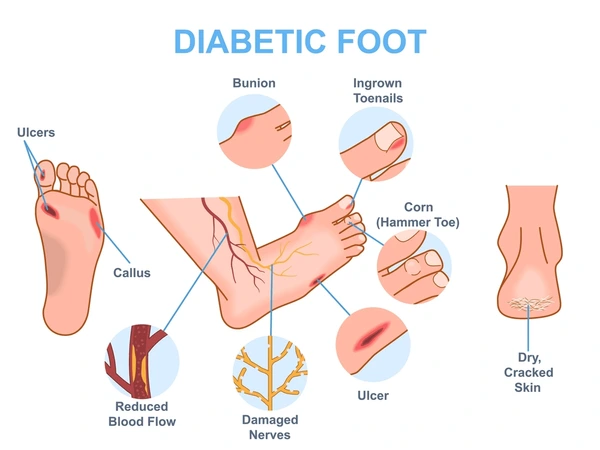
- Slow-healing wounds
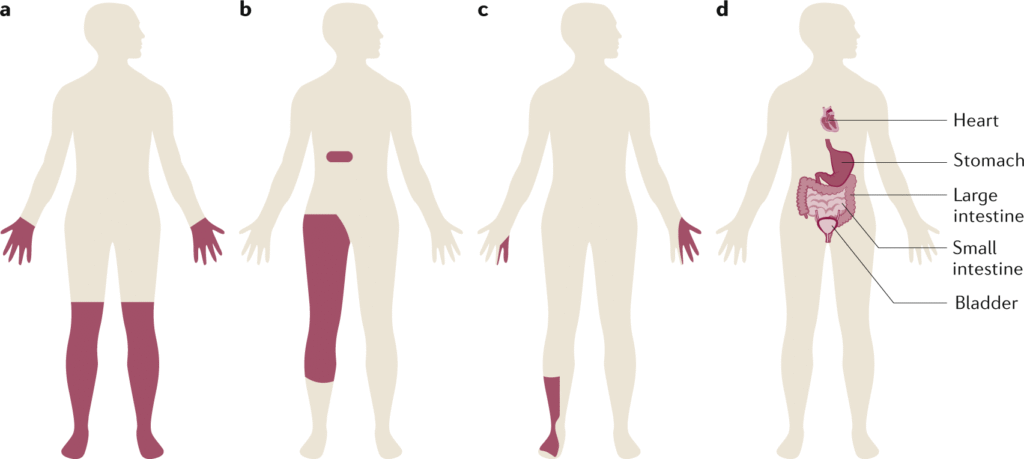
- Numbness or tingling in hands/feet
- Frequent infections (skin, urinary tract, gums)
Complications (if uncontrolled)
- Heart disease and stroke
- Kidney damage (Diabetic Nephropathy)
- Eye damage (Diabetic Retinopathy, blindness)
- Nerve damage (Neuropathy)
- Foot ulcers, gangrene
- Poor immunity
- Diabetic ketoacidosis (more in Type 1)
- Hyperosmolar hyperglycemic state (in Type 2)
Diagnosis
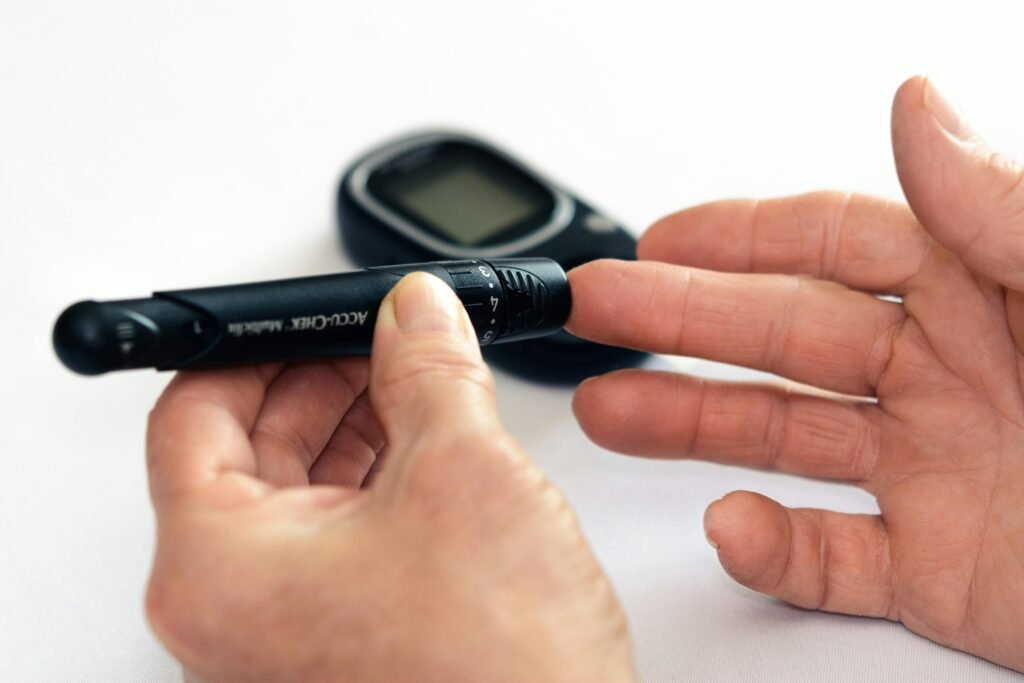
- Fasting Blood Sugar: ≥126 mg/dL
- Random Blood Sugar: ≥200 mg/dL with symptoms
- HbA1c: ≥6.5%
- Oral Glucose Tolerance Test: 2-hour value ≥200 mg/dL
Homeopathic Perspective
Homeopathy does not treat “diabetes” as just one disease; it treats the patient as a whole.
The choice of remedy depends on:
- Physical symptoms
- Mental and emotional state
- Personal health history
- Complications present
- Commonly used remedies:
- Syzygium jambolanum: Reduces sugar levels, especially with intense thirst.
- Phosphoric acid: Diabetes after grief, mental exhaustion.
- Uranium nitricum: Diabetes with gastric problems.
- Lycopodium: Bloating, digestive troubles, weak memory.
- Sulphur: Burning sensation in feet, intense thirst. (Only under the guidance of a qualified homeopath.)
Lifestyle & Prevention
- Eat a balanced diet: high fiber, low refined sugar, more vegetables and whole grains.
- Maintain healthy body weight.
- Exercise regularly (30–45 minutes daily).
- Avoid smoking and alcohol.
- Manage stress through yoga, meditation, or hobbies.
- Get regular medical check-ups.