Kidney

Bone, Kidney

Gouty Arthritis

Gouty Arthritis is a type of inflammatory arthritis caused by excess uric acid in the blood.
It leads to the formation of sharp urate crystals in the joints, causing sudden severe pain.
The big toe is most commonly affected, but other joints may also be involved.
Risk factors include obesity, high-purine diet, alcohol intake, kidney disease, and family history.
Treatment includes medications to lower uric acid, pain relief, and lifestyle modifications.

Gouty Arthritis Read Post »

upper vs lower uti
Female Health Issues, Kidney

Upper vs Lower UTI

Urinary Tract Infections (UTIs) are classified into upper and lower types.
Lower UTI affects the bladder (cystitis) and urethra, causing burning urination, urgency, and pelvic pain.
Upper UTI involves the kidneys (pyelonephritis), with fever, chills, nausea, and flank pain.
Upper UTIs are more serious and can lead to kidney damage or sepsis if untreated.
Early recognition and proper treatment help prevent complications in both types.

Upper vs Lower UTI Read Post »

catheter associated uti (cauti)
Female Health Issues, Kidney

Catheter-Associated UTI (CAUTI) – कैथेटर से जुड़ा मूत्र संक्रमण

Catheter-Associated UTI (CAUTI) is a urinary infection that develops in people using urinary catheters.
It is one of the most common hospital-acquired infections.
Risk increases with long-term catheter use, poor hygiene, and underlying illness.
Symptoms include fever, burning sensation, cloudy or foul-smelling urine, and pelvic pain.
Prevention focuses on limiting catheter use, maintaining hygiene, and timely catheter removal.

Catheter-Associated UTI (CAUTI) – कैथेटर से जुड़ा मूत्र संक्रमण Read Post »

complicated uti
Female Health Issues, Kidney

Complicated UTI (जटिल मूत्र संक्रमण)

Complicated UTI occurs when infection is linked to structural or medical problems in the urinary tract.
It is common in patients with diabetes, kidney stones, catheters, or weak immunity.
Symptoms may include fever, flank pain, burning urination, and blood in urine.
These infections are harder to treat and can spread to kidneys or bloodstream.
Accurate diagnosis, targeted antibiotics, and managing the underlying cause are vital.

Complicated UTI (जटिल मूत्र संक्रमण) Read Post »

recurrent uti
Female Health Issues, Kidney

Recurrent UTI (बार-बार होने वाला मूत्र संक्रमण)

Recurrent UTI means repeated urinary tract infections, usually defined as two or more in six months, or three or more in a year.
It is more common in women due to shorter urethra and hormonal factors.
Causes include incomplete bladder emptying, poor hygiene, kidney stones, or underlying health conditions.
Symptoms are similar to regular UTIs — burning urination, frequent urge, and pelvic discomfort.
Prevention includes hydration, proper hygiene, cranberry products, and medical evaluation for underlying causes.

Recurrent UTI (बार-बार होने वाला मूत्र संक्रमण) Read Post »

asymptomatic bacteriuria (silent uti)
Female Health Issues, Kidney

Asymptomatic Bacteriuria (Silent UTI)

Asymptomatic bacteriuria means bacteria are present in the urine without symptoms.
It is more common in women, older adults, and people with diabetes.
Usually, it does not require treatment unless in pregnancy or before urinary procedures.
Treating unnecessarily can lead to antibiotic resistance.
Screening and treatment are recommended only in specific high-risk groups.

Asymptomatic Bacteriuria (Silent UTI) Read Post »

pyelonephritis (kidney infection)
Kidney

Pyelonephritis (Kidney Infection)

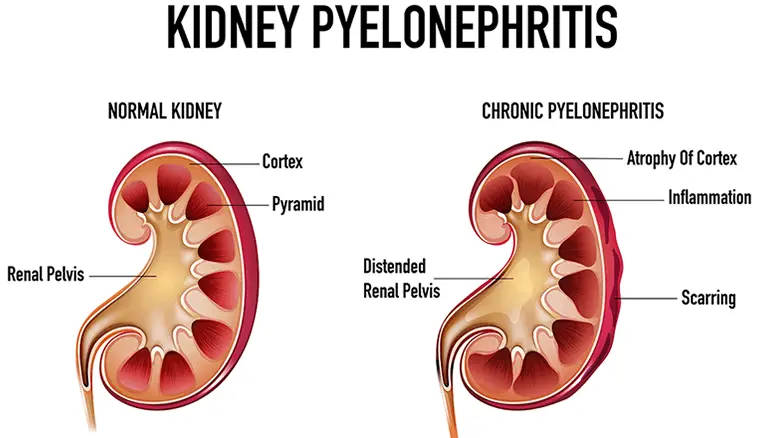
Pyelonephritis is a serious urinary tract infection that reaches the kidneys.
It is commonly caused by bacteria, often spreading upward from the bladder.
Symptoms include fever, chills, flank or back pain, nausea, and painful urination.
If untreated, it can lead to kidney damage, abscesses, or sepsis.
Prompt medical treatment with antibiotics and hydration is essential for recovery.

Pyelonephritis (Kidney Infection) Read Post »

cystitis (bladder infection)
Female Health Issues, Kidney

Cystitis (Bladder Infection)

Cystitis, commonly known as a bladder infection, is an inflammation caused mainly by bacterial infection, particularly E. coli. Symptoms include a frequent urge to urinate, burning during urination, and cloudy urine. Diagnosis typically involves urinalysis and urine culture to identify the causative bacteria. Treatment generally consists of antibiotics and pain relief. Preventive measures include proper hygiene and staying well-hydrated.

Cystitis (Bladder Infection) Read Post »

kidney problems during pregnancy
Female Health Issues, Kidney

Kidney Problems During Pregnancy

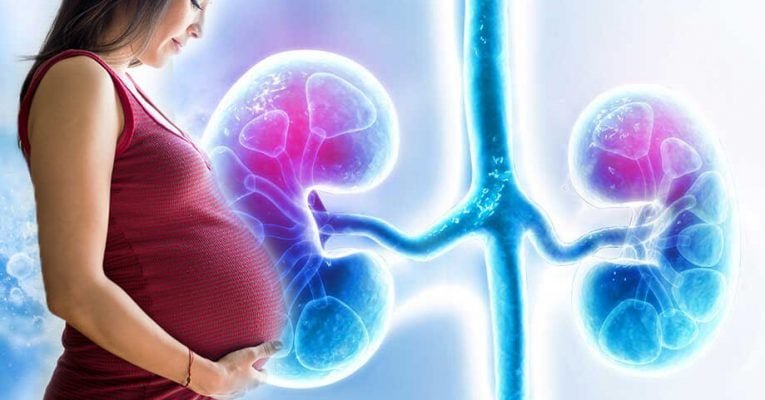
Kidney problems during pregnancy can range from pre-existing chronic kidney disease to conditions that develop or worsen due to pregnancy. Common issues include urinary tract infections (UTIs), preeclampsia, acute kidney injury (AKI), and worsening of underlying kidney disorders. Pregnant women are more susceptible to infections and fluid–electrolyte imbalances because of hormonal and physiological changes in the urinary tract

Kidney Problems During Pregnancy Read Post »

kidney tubule problems (renal tubular disorders)
Kidney

Kidney Tubule Problems (Renal Tubular Disorders)

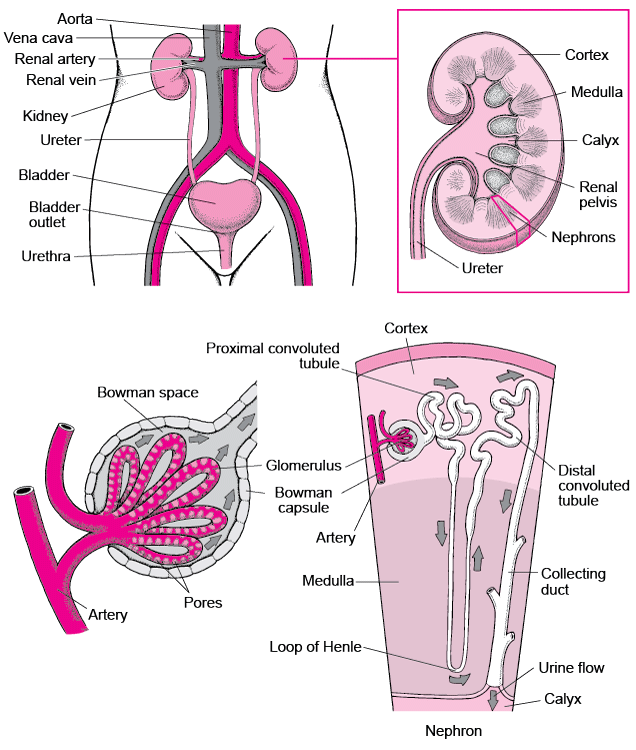
Renal tubular disorders are conditions that affect the kidney tubules, which play a crucial role in reabsorbing water, electrolytes, and nutrients, and in maintaining acid–base balance. These disorders may be genetic or acquired and can result in abnormal urine composition, electrolyte imbalances, or impaired kidney function. Common examples include renal tubular acidosis (RTA), Fanconi syndrome, Bartter syndrome, and Gitelman syndrome. Symptoms may range from dehydration, muscle weakness, and growth disturbances in children, to kidney stones and metabolic acidosis in adults. Diagnosis is based on blood and urine tests, while treatment focuses on correcting electrolyte imbalances and managing underlying causes.

Kidney Tubule Problems (Renal Tubular Disorders) Read Post »