Simple Goitre (Non-toxic Goitre)
What is Simple Goitre (Non-toxic Goitre)
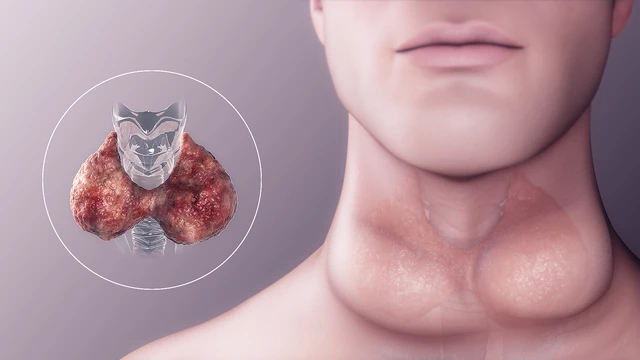
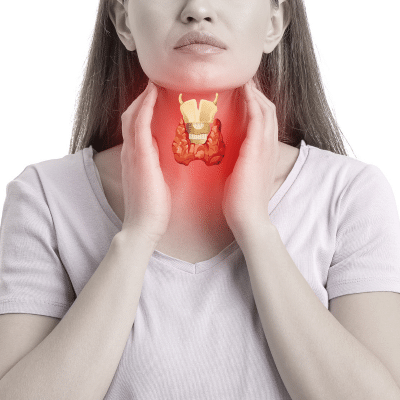
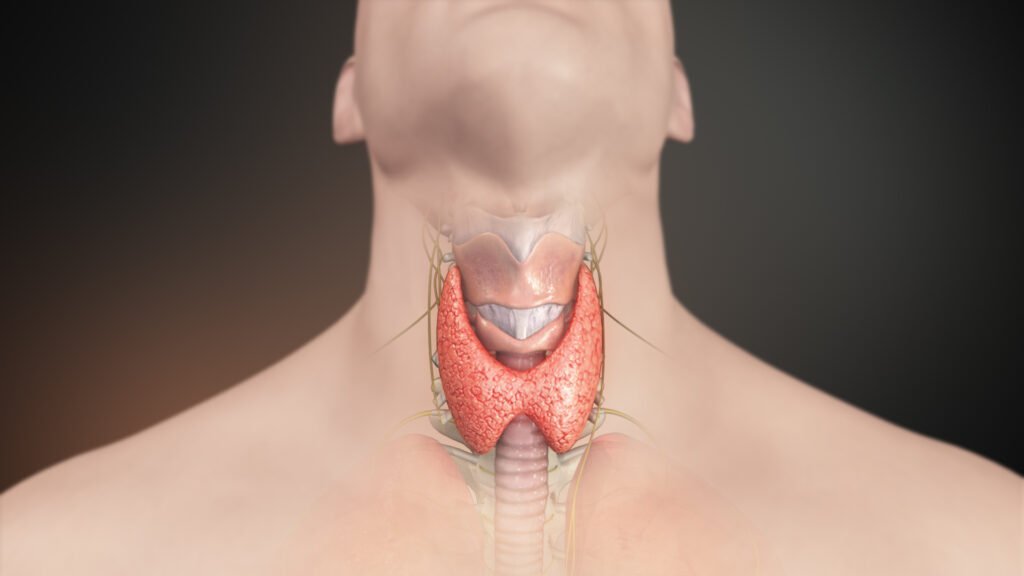
Simple goitre — also called non-toxic goitre — means enlargement of the thyroid gland without any change in thyroid hormone levels.
That means:
Thyroid is bigger, but not overactive (hyperthyroid) and not underactive (hypothyroid).
It’s basically a mechanical enlargement, often due to iodine deficiency, and is common in teenagers and young females.
Pathophysiology (Mechanism)
The thyroid needs iodine to make its hormones (T3 & T4).
When there’s not enough iodine in the diet, thyroid can’t make enough hormones — so the pituitary gland releases more TSH to push the thyroid to work harder.
This constant stimulation by TSH causes the thyroid gland to grow in size, forming a goitre.
Over time, it may remain diffuse (even swelling) or become nodular (lumpy).
Causes
- Iodine deficiency (most common)
- Increased physiological demand (like puberty, pregnancy)
- Drugs (Lithium, Amiodarone)
- Genetic or congenital enzyme defects in hormone synthesis
- Dietary goitrogens (Cabbage, Cauliflower, Broccoli, Soybeans — if consumed in excess)
Symptoms
- Usually asymptomatic except for a visible neck swelling.
But in some cases, patient may feel — - Swelling in the front of the neck that moves on swallowing
- Heaviness or pressure in the neck
- Mild difficulty in swallowing or breathing (if large)
- No symptoms of hyper or hypothyroidism
Clinical Types
- Diffuse Simple Goitre – entire gland enlarged evenly.
- Nodular Simple Goitre – one or more lumps or nodules in the gland.
- Colloid Goitre – long-standing simple goitre with colloid (gel-like) accumulation inside thyroid follicles.
Investigations
- Thyroid Function Test (T3, T4, TSH) → Normal in simple goitre
- Thyroid Ultrasound → to check nodules or structure
- Thyroid Scan (if needed) → for functional status
- FNAC → if any suspicious nodule or irregular growth
Homeopathic Management
In homeopathy, we don’t just see the goitre — we look at the whole person:
their constitution, emotions, and causative factors.
Homeopathic remedies help to reduce gland enlargement and restore balance naturally.
Homeopathic Medicines
1. Iodium
- Excellent remedy for iodine-deficiency goitre.
- Patient is thin, hyperactive, hot, with increased appetite but losing weight.
- Gland feels hot and painful; better from eating.
- Useful in adolescent girls and young adults.
2. Spongia Tosta
- For hard, dry, wooden-like swelling in the neck.
- Throat feels tight, dry, and constricted.
- Often used in early stages of simple or non-toxic goitre.
- Voice may sound hoarse or deep.
3. Calcarea Iodata
- Especially indicated in soft goitre in young girls at puberty.
- Thyroid feels enlarged but not painful.
- Patient may be chilly, anemic, sluggish, and prone to weight gain.
- Works wonderfully in simple or early nodular goitre.
4. Bromium
- For hard, stony swelling of thyroid in fair, delicate individuals.
- Feels as if there’s a lump choking the throat.
- Better in cool air; worse from heat.
- Commonly used in non-toxic goitre with tightness of chest or neck.
5. Natrum Muriaticum
- Goitre linked with emotional suppression or grief.
- Patient is introverted, sensitive, avoids consolation.
- Glandular swelling with dryness of skin and lips.
- Useful for constitutional cases where emotional cause is major.
6. Thyroidinum
- Organ remedy for thyroid dysfunctions (both hypo & hyper).
- Helps in regulating thyroid metabolism and reducing enlargement.
- Used as a supportive medicine with constitutional remedy.
Diet & Lifestyle
- Always use iodized salt in food.
- Include seafood, eggs, milk, curd for natural iodine.
- Avoid excess goitrogenic foods (raw cabbage, cauliflower, soy).
- Avoid tight collars or necklaces that press the neck.
- Keep thyroid checked every 6–12 months.
Summary
“Simple goitre is the thyroid’s way of saying it needs a little more support — not punishment.”
With homeopathic treatment, we help the gland shrink back to its normal size, restore iodine balance, and ensure the thyroid remains healthy without artificial hormone dependence.