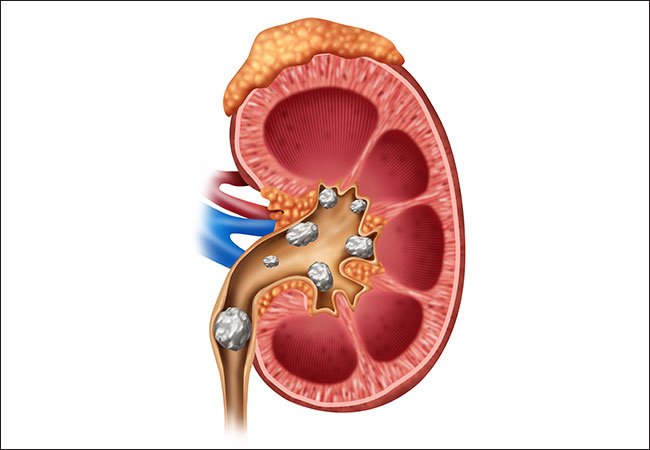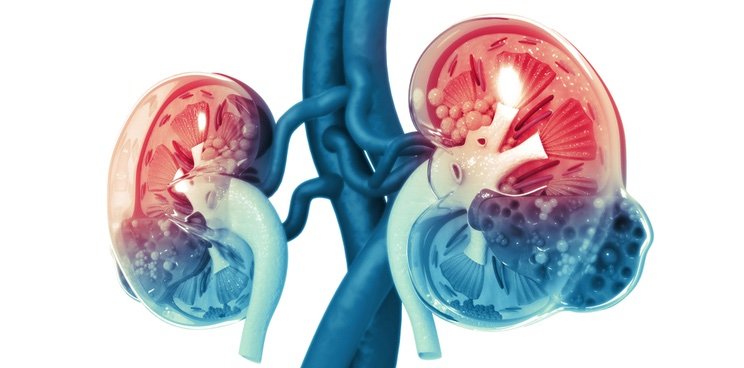
What is Kidney Tubule Problems (Renal Tubular Disorders)
Our kidneys are like natural filters. Inside them are millions of tiny units called nephrons, and each nephron has tubules. These tubules don’t just filter, they also reabsorb important things (like water, salts, sugar, bicarbonate) and throw away waste.
- When these tubules don’t work properly, different problems happen. Let’s see them in easy words:
Renal Tubular Acidosis (RTA)
Normally, kidneys keep our blood neither too acidic nor too alkaline.
- In RTA, the kidneys cannot remove acids properly → blood becomes acidic.
- Signs you may notice:
- Weak bones (soft, bending, or painful).
- Kidney stones.
- Tiredness, poor growth in children.
- Sometimes weakness due to high or low potassium.
Fanconi Syndrome
Here, the front part of the tubule (proximal tubule) loses many useful things in urine: sugar, amino acids, phosphate, bicarbonate.
- So the body lacks energy and minerals.
- Signs you may notice:
- Passing a lot of urine, getting dehydrated.
- Weak or soft bones (rickets in children, osteomalacia in adults).
- Slow growth in kids.
Bartter Syndrome
A rare problem where kidneys behave as if you are taking too many “water tablets” (diuretics).
- Body loses potassium and salt.
- Signs you may notice:
- Muscle weakness or cramps.
- Tiredness.
- Lots of urine.
- Children may not grow well.
Gitelman Syndrome
- Very similar to Bartter, but usually milder.
- Body loses potassium and magnesium.
- Signs you may notice:
- Muscle cramps, weakness.
- Numbness or tingling in hands/feet.
- Children may feel weak and grow slowly.
Liddle Syndrome
A rare inherited problem.
- Kidneys hold too much salt and water, leading to high blood pressure.
- Signs you may notice:
- High BP at a young age.
- Tiredness, muscle weakness.
Nephrogenic Diabetes Insipidus (NDI)
Normally a hormone called ADH tells kidneys to save water.
- In NDI, kidneys don’t listen to ADH → all the water goes out in urine.
- Signs you may notice:
- Passing too much urine (clear, watery).
- Feeling very thirsty all the time.
- Risk of dehydration, especially dangerous in children.
Homeopathic View
Homeopathy does not “change” the structure of the kidney tubules, but it may help the body cope better and reduce the discomfort:
- Weak bones, poor growth: Calcarea carb, Phosphorus, Silicea.
- Loss of salts and weakness: Natrum mur, Kali carb, Lycopodium.
- High blood pressure from kidney cause (like Liddle): Baryta mur, Nux vomica.
- Excessive thirst and urination (like NDI): Phosphoric acid, Bryonia, Natrum mur.
- Treatment is always individualized, depending on your exact symptoms.
Summary
Kidney tubules act like a “quality-control” unit in your body.
- When they fail, you may face: weak bones, slow growth in children, too much urine, too much thirst, cramps, weakness, or high BP.
- These disorders are often inherited (from birth) or caused by certain medicines/diseases.
- Medical care is needed to balance salts and protect health.
Homeopathy may support your body by improving general health and reducing complications.